
Shopify Dropshipping Customer Service: 10 Essentials Stores Use to Keep Customers Happy
Customer service can make or break a Shopify dropshipping store. You do not control warehousing or shipping, so your main advantage is how well you support and communicate with customers before and after they buy. This guide walks through practical steps to deliver reliable, professional support that keeps customers coming back—even when suppliers and shipping times are outside your direct control.
Key Takeaways
| Question | Answer |
|---|---|
| What does great customer service look like in Shopify dropshipping? | Fast replies, clear expectations on shipping, accurate product information, and proactive updates when there are delays or issues. |
| How fast should I respond to support messages? | Aim for under 2–4 hours during business hours, and within 24 hours at most. Use templates and help desk tools to stay consistent. |
| How do I avoid supplier issues hurting my customer relationships? | Work with vetted suppliers and tools like the Shopify Dropshipping Supplier Solution so order status, tracking, and stock updates stay accurate. |
| What policies do customers expect? | Clear shipping times, refund and returns policy, and instructions on how to contact support—all written in simple language. |
| Do I need a business structure or EIN to handle customer service professionally? | Not strictly for support itself, but structuring your business properly (see this guide on the Shopify EIN Number) helps with trust and supplier relationships. |
| Is dropshipping too risky because of customer service issues? | There are real drawbacks—shipping delays, quality issues, and low margins. Understanding these risks (explained in Why Dropshipping Is a Bad Idea) lets you design stronger service processes around them. |
| How can I get help setting up a store with solid support built in? | Done For You eCom Store offers pre-built store and supplier solutions that already account for product, shipping, and support workflows. |
1. Why Customer Service Matters More in Shopify Dropshipping Than Anywhere Else
In a traditional ecommerce model you control inventory and shipping. In Shopify dropshipping your suppliers handle fulfillment, which means you have less control over what happens after the sale. Customer service is where you regain that control in the eyes of your buyer.
Shoppers do not care that you are dropshipping; they only see your brand. When products arrive late, damaged, or different than expected, you are the one they contact. How you respond decides whether they ask for a refund, leave a bad review, or become a repeat customer.


2. Setting Realistic Expectations: Shipping Times, Policies, and Communication
Most dropshipping complaints start with mismatched expectations. If you are sourcing from overseas, 7–21 day shipping is common; if your store promises “3–5 days” you will face constant support problems. Clear, honest expectations reduce refunds and angry emails.
Write shipping and return policies in plain language. Include estimated processing time, shipping windows, and how you handle lost or delayed orders. Add this information to product pages, the cart, and order confirmation emails so customers see it multiple times.


3. Building a Response System: How Fast and How Often to Reply
Fast, reliable responses are one of the few things completely under your control. Aim for a response time of a few hours during your stated support hours, and never more than 24 hours. Let customers know when support is available and stick to it.
Use simple templates for common situations—order status, tracking links, late shipments, damaged items, and refunds. Personalize each reply with the customer’s name and order details, but rely on structured responses so your tone stays consistent and professional.

4. Using Help Desk Tools and Automation the Right Way
As your Shopify store grows, managing customer messages through a single inbox quickly becomes messy. A help desk tool or support app lets you organize tickets, tag frequent issues, and automate simple replies like “we received your message and will reply soon.”
Automation works best for status updates and FAQs. For example, sending tracking links automatically when orders ship, and reminding customers of your shipping window if they ask “Where is my order?” within a few days of purchase. Always keep the option to reply manually when issues are sensitive or complex.


5. Picking Suppliers That Make Customer Service Easier, Not Harder
No support strategy can fully compensate for unreliable suppliers. Late shipments, stock-outs, or poor packaging will constantly force you into apology mode. To reduce that risk, work with vetted suppliers and systems designed for dropshipping rather than random marketplaces.
Shopify Dropshipping Supplier Solution
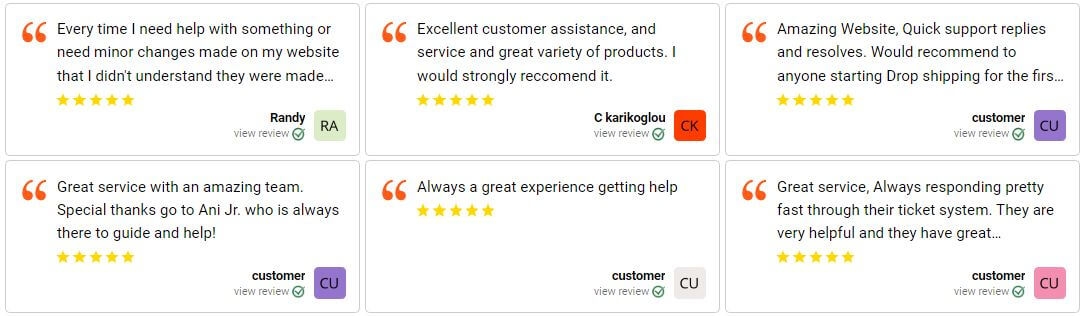
Done For You eCom Store offers a Shopify Dropshipping Supplier Solution that connects you with over 100 suppliers and thousands of products already prepared for Shopify. Products are pre-vetted and “proven-to-sell”, which means fewer surprises and fewer complaints about quality or misrepresented items.
Because the service handles product import, inventory syncing, and order routing for you, it becomes easier to answer customer questions accurately. You can check stock, shipping status, and profit margins in one place rather than chasing different suppliers manually.

6. Designing Product Pages That Reduce Support Tickets
Many support issues trace back to product pages that are vague, misleading, or incomplete. If customers do not understand what they are buying, they will ask more questions, request more refunds, and leave more negative feedback. Clear content upfront is a major part of customer service.
Include accurate photos, sizes, materials, and usage instructions. Add a short “Shipping & Returns” note on each product page instead of hiding it in a footer link. If some products have longer shipping times or special care instructions, say so right where customers are making their decision.
7. Handling Common Dropshipping Problems: Delays, Damage, and Wrong Items
Some issues are unavoidable in dropshipping, no matter how careful you are. Packages can arrive late, boxes can be damaged, and once in a while a supplier ships the wrong variation. What matters most is that you have a clear, consistent way of dealing with these situations.
Create simple rules such as: “If an order is 10 days past the maximum shipping estimate, offer a refund or reshipment,” or “If a product arrives damaged, ask for a photo and then issue a replacement.” Share these internally so you or your team do not decide on a case-by-case basis under pressure.
Tip: When the problem is clearly on the supplier’s side, do not make the customer wait for you to “fight” with the supplier. Resolve the issue for the customer first, then handle the supplier separately.

8. Turning Support Into Long-Term Loyalty and Repeat Orders
Handled well, a problem can create more loyalty than a perfectly smooth order. When customers see that you accept responsibility, respond quickly, and fix issues without drama, they feel safer buying again. This is especially important in dropshipping, where first-time buyers may be cautious.
Follow up after resolving a ticket: ask if everything is now okay and whether they have any other questions. When appropriate, you can offer a small discount on a future order as a thank-you for their patience. Focus on building trust rather than protecting every cent of short-term profit.


9. When and How to Ask for Reviews Without Annoying Customers
Positive reviews are a public record of your customer service. They reassure new customers who are unsure about buying from a Shopify store they have never heard of before. Timing matters: ask for a review only after you know the product has arrived.
Use a polite, short request in email: thank the customer, ask if everything arrived as expected, and then share a direct link where they can leave feedback on your store or on specific products. Avoid offering rewards in ways that might appear to “buy” positive reviews—focus on genuine experiences.
10. Getting Help: When to Bring in Done For You Solutions and Expert Support
If you are new to Shopify dropshipping, building reliable customer service systems from scratch can feel overwhelming. Between finding suppliers, loading products, writing policies, and answering every email yourself, it is easy to make mistakes that cost you customers.
Done For You eCom Store specializes in pre-built stores, supplier integrations, and guidance that factor customer support into the entire model—product selection, shipping, policies, and communication. If you prefer not to test every process the hard way, working with a done-for-you solution can shorten the learning curve and reduce support headaches from day one.
Conclusion
Customer service is not a side task in Shopify dropshipping—it is the core of your business. You cannot always control every shipment or supplier decision, but you can always control how you inform, respond to, and look after your customers.
Set clear expectations, respond quickly, use the right tools, and work with reliable supplier solutions so your support team is not constantly fixing preventable problems. When you build your store around honest communication and consistent service, dropshipping becomes more stable, more predictable, and far more profitable over the long term.

Scaling and Traffic Acquisition for Automated Stores: A 2026 Playbook for Jumpstarting Sales
Scaling and Traffic Acquisition for Automated Stores: A 2026 Playbook for Jumpstarting Sales...
How to Spot Fulfillment Leaks Before They Eat Your Margins (2026 Checklist)
How to Spot Fulfillment Leaks Before They Eat Your Margins (2026 Checklist) How to Spot...
10 Pre Built Dropshipping Store Solutions for Quick Success
Overview This article highlights ten pre-built dropshipping store solutions designed specifically...